Why Regents Park
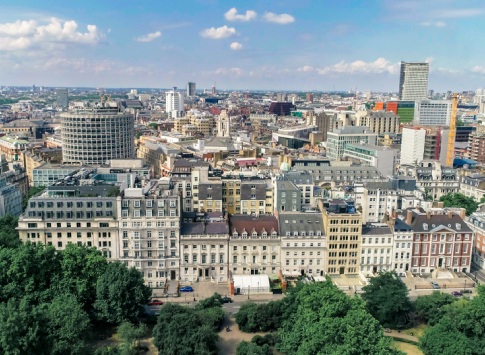
Regent’s Park remains the green jewel of central London, with abundant space to relax, exercise, browse the manicured gardens (or even visit the zoo!). Surrounding this green expanse are some of the Capital’s most prestigious neighbourhoods; Marylebone, Primrose Hill, Maida Vale and more. As such, the properties littered around the park’s perimeter are highly valued and make for a delightful place to live, both near to the city’s activity, and verdant enough to make you think you’d moved to the countryside.
Regents Park is in the north-west part of central London and is split between the City of Westminster and the London Borough of Camden. In the early 1800s, Prince Regent George IV commissioned the building of a public park and garden suburb. The park and surrounding villas were designed and built by John Nash, James Burton and Decimus Burton.
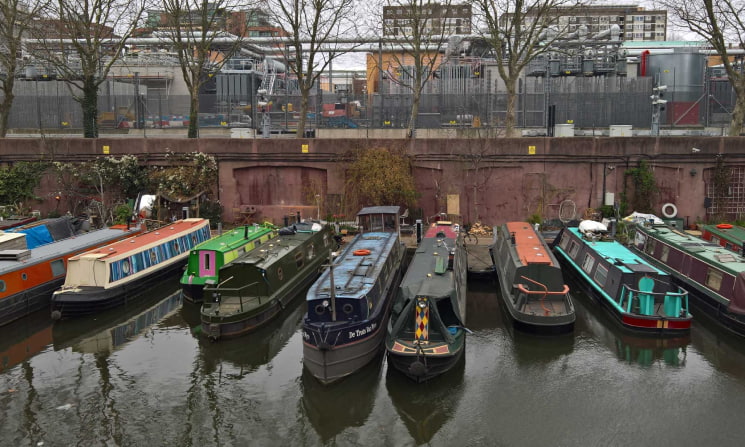
The park’s south, east and west sides are lined with elegant white stucco terraces of houses designed by John Nash and Decimus Burton. Stunning Park Square and Park Crescent are beautifully preserved and highly sought-after. Cornwall Terrace, York Terrace and Chester Terrace provide glamorous high-end homes overlooking Regents Park. Regents Canal runs through the park’s northern end, which connects the Grand Union Canal to London’s historic docks. Immediately to the north is Primrose Hill, with stunning views across central London.
Location & History
Regent’s Park sits in north-west Inner London, its 410 acres split administratively between the City of Westminster and the London Borough of Camden. To its south lies Marylebone Road; to the north, Primrose Hill and Camden Town; to the west, St John’s Wood. It is one of the most significant pieces of planned urban landscape in the country.
The land was originally part of the medieval forest of Middlesex, before Henry VIII appropriated it in the 1530s as a royal hunting ground. For two centuries thereafter it was leased out as farmland before John Nash, architect to the Prince Regent, proposed a sweeping redesign in 1811. Nash’s vision was vast — grand terraces encircling a central park, exclusive villas within its grounds, and a processional route running south to St James’s Palace. That route became Regent Street. The park itself opened to the public in stages from 1835 onwards.
What Nash and Decimus Burton left behind is extraordinary and still largely intact. The white stucco terraces — Cumberland Terrace, Chester Terrace, Cornwall Terrace and others — line the Outer Circle like palace facades, each named after titles held by the Royal family. Grade I listed as individual buildings and as a whole park, they represent one of the most ambitious examples of early 19th-century town planning anywhere in Britain. Hanover Terrace, in particular, has drawn a notable roll-call of past occupants: H.G. Wells lived at No. 13, Wilkie Collins at No. 17, and Ralph Vaughan Williams at No. 10 in the final years of his life. Composer Joseph Haydn moved to Lisson Grove in 1791 specifically to work in the relative quiet the area afforded.
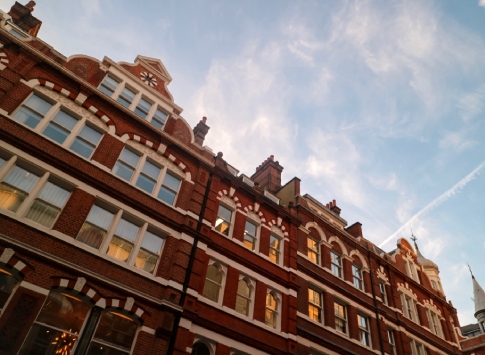
Today, the streets bordering the park draw well-heeled professionals, families and international buyers, drawn by a combination of architectural grandeur, proximity to Zone 1 transport, and the 410 acres of green space on the doorstep. Properties directly facing the park tend toward the exceptional — vast, rarely available, and priced accordingly. Moving outward, the streets around Albany Street and the eastern side of the park offer more varied Georgian, Victorian and Edwardian stock. Regent’s University London occupies a villa within the Inner Circle, and London Business School sits on the Outer Circle, giving the area a steady academic as well as residential identity. For those who want to be within walking distance of central London while living beside one of the capital’s great designed landscapes, few addresses compare.
Restaurants & Shopping
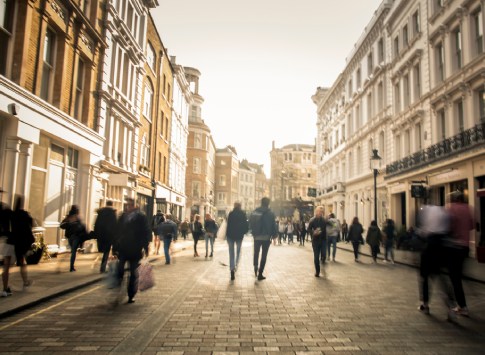
Regent’s Park and the neighbourhoods around its perimeter provide a multitude of ways to shop and spend your free time. Here, independent shops are a defining feature of each street: Daunt Books occupies an Edwardian building with its oak galleries and long windows, while La Fromagerie and The Ginger Pig offer exceptional cheeses and meats. Fashion houses Agnes B and Margaret Howell stand besides smaller independent shops.
Camden Market has evolved considerably over the decades, gaining numerous accolades, including the fact that it has over 1000 shops and stalls dedicated to food, clothing, farmers market goods and bespoke bric-a-brac. Stalls spill out into historic buildings and courtyards, with ample space to browse and explore what’s on offer.
Restaurants orbiting Regents Park span from casual cafés to refined dining rooms. On Marylebone High Street, you’ll find Fischer’s serving Austrian classics in brass and wood surroundings, while Carousel brings in different chefs each month to create new menus. The streets around Regent’s Park house established favourites like The Wolseley and Chiltern Firehouse, where booking well ahead becomes essential. For simpler meals, local cafés and bakeries dot the side streets – places like Gail’s Bakery for morning coffee and Natural Kitchen for lunch. Primrose Hill adds a whole other layer to these choices, with neighbourhood spots like Greenberry Café and Lemoni building on the (already large) repertoire of acclaimed eating spots.
Transport Links
Regents Park is accessible from the many neighbourhoods surrounding it, and its central position ensures that it’s easy to get in and out of the area, should you like to do so. Here are a few of the local transport options available…
- Car: The Outer Circle and Inner Circle ring roads surround Regent’s Park. Major roads in the vicinity include Marylebone Road, Euston Road, and Park Road.
- Bus: Several Transport for London (TfL) bus routes run along the roads bordering Regent’s Park, providing a large web of connections to the rest of London.
- Tube: There’s a huge range of options by tube in Regent’s Park. First, Regent’s Park station (on the Bakerloo Line) is located very close on the southern edge of the park. Other nearby Tube stations include Baker Street (Bakerloo, Jubilee, Metropolitan, Circle, Hammersmith & City Lines), Great Portland Street (Circle, Hammersmith & City, Metropolitan Lines), and Marylebone (Bakerloo Line).
- Train: Mainline rail services are available from Marylebone and Euston stations, both within easy walking distance of the park. Trains from here will help you get around London and go far beyond it.
- Airports: Regent’s Park is within respectable reach of several major airports, including Heathrow, Gatwick, and City Airport. These are accessible by a combination of public transport (Tube, rail) and taxi.
Local Schools
Regents Park has a fantastic choice of preparatory, primary and senior schools.
In the independent sector, The Cavendish School is a preparatory school for girls aged 3-11, North Bridge House Preparatory is a co-educational school for children aged 4-13 and Francis Holland School is a senior school for girls aged 11 to 18. There are many more independent schools to choose from too, many of which are found across the neighbourhoods orbiting Regents Park.
State schools in the area are also excellent. Outstanding primary schools include Richard Cobden Primary School (Camden Street), Primrose Hill School (Princess Street), Our Lady Roman Catholic Primary School (Pratt Street) and Christ Church Bentinck CofE Primary School (Cosway Street). Ark King Solomon Academy on Penfold Street is also rated outstanding by Ofsted and caters for children aged 2 to 18.
If you’d like to explore more schooling options, look at this portal from the local council.
Things To Do
Regent’s Park itself is a major attraction, offering manicured green spaces like Queen Mary’s Gardens, open areas for picnics, and boating on the lake. Within the park, you can also find the Open Air Theatre, which hosts a swathe of performances across the summer months – and then there’s the London Zoo, a large zoological park with a huge variety of animals.
The area around Regents Park offers several more points of interest to explore. The Sherlock Holmes Museum is located nearby on Baker Street, while Madame Tussauds wax museum is just a short walk away. The renowned Camden Market and Lords Cricket Ground are two more famous locations to tick off your list.
Meanwhile, for art connoisseurs, the Wallace Collection offers a magisterial collection of fine and decorative art pieces. Oxford Street and Marylebone are also a huge draw to the area, offering an endless array of high-end destinations to shop.
Property in Regents Park
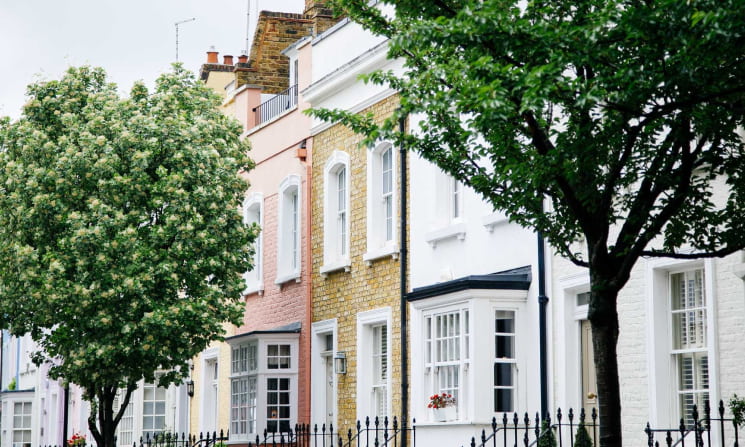
Regent’s Park is renowned for its stoic, Regency-era terraces designed by John Nash. These stucco-fronted properties sport elegant columns, sculpted balconies, and often include access to private communal gardens. You’ll also find a mix of mews houses, originally built as stables and now converted into charming homes – but still retaining a quaint and rustic touch.
Modern, luxury apartments are gradually emerging in Regent’s Park, offering contemporary living spaces, some with views of the park. Additionally, there are a few detached villas which provide substantial living spaces in the area.
In the past year, properties in Regent’s Park sold for an overall average price of £941k. Flats comprised most of these sales, with an average price of £793k. The average price for terraced properties was even higher, at £1.7m.
You can explore recent updates and changes to property prices around Regents Park here.