
Kubie Gold is an independent estate and letting agent in Soho London, fuelled by an in-depth understanding of the local property market.
Soho properties are some of the most valuable in London, so we take great care to look after them. That way, you can achieve the best possible rental income, or sell your home at the highest market price. Whatever your goals, our Soho estate agents will create a strategy that suits you and takes advantage of the thriving property market.
We believe that life as a landlord should be easy and enjoyable, so we take care of the details that eat away at your time – from finding tenants to collecting rent. Whether you’re a first-time landlord or an experienced portfolio holder, our Soho Letting agents will treat your property as if it were their own.
"*" indicates required fields
"*" indicates required fields
36 Ivor Place, Marylebone, NW1 6EA
02075637272
info@kubie-gold.co.uk
Monday - Friday: 9:30am to 6pm
Saturday: 10am to 2pm
Sunday: Closed
Find out what our leading estate agents can do for you in Soho in London. Whether you are looking to buy, sell, let or rent – we can help with high quality property services.

Director

Sales

Lettings

Lettings

Director
Here’s what we can offer to landlords and home sellers in this vibrant part of central London.
Our estate agents in Soho will guide you through each stage of your property journey so you can complete your sale as efficiently as possible. If you want to sell your home, talk to our friendly team today.
Our letting agents in Soho will help make your life easier as a landlord – from help with compliance to more hands-on property management. Whatever your experience level, we can advise you to achieve long-lasting and profitable tenancies.
Keen to get started with your soho property sale or lettings journey? Either way, it all starts with a valuation from our estate agents in Soho, London. Click here to get started – and see how much you could get for your property.
Find out much your property is worth. We can arrange an accurate market appraisal of your property at a time convenient for you.
Find out the essentials about the Soho area, from it’s landmarks and attractions, to its transport and local property market.
From its cutting-edge creative industry, to its quaint old pubs and eclectic shops – Soho fully embraces its unique character and history. It’s long since risen above its seedy reputation, but still retains the raw charm of its winding alleyways, bohemian shops and thriving nightlife.
It’s become a foodies’ paradise that never sleeps, with iconic pubs, clubs and restaurants open at all hours of the day, offering an incredible range of food and drink. Amongst the many studio flats and flashy new apartments, you can find more historical properties tucked away and waiting to be discovered.
Living in Soho means you’ll be in the centre of the action, and if that’s not enough, the rest of central London lies at your doorstep. It also connects you to the musical, artistic and creative industries that have made their home there. Whether or not you work in one of these industries, you’ll benefit from the music venues, excellent restaurants and quirky shops across the area. Soho is also set apart by the fact that it retains many of historical buildings and traditional streets that have been lost elsewhere.
Equally, Soho is incredibly central and offers very easy access to the heart of London. Property in Soho is highly desirable for this exact reason. The overall average sale price for property remains about £1.3m (Source: HM Land Registry), demonstrating the immense value of the location.
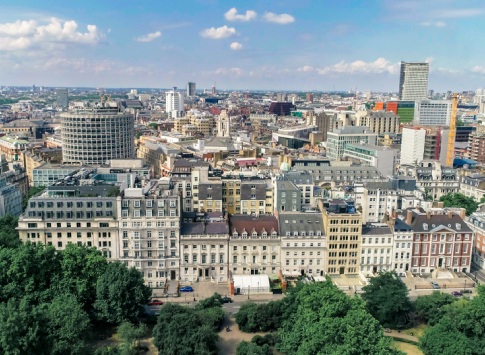
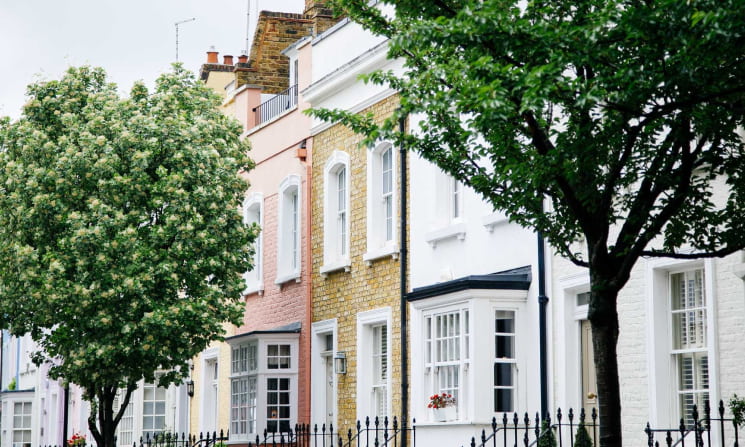
Soho’s property market has a mix of converted Georgian terraced houses, purpose-built mansion blocks from the Victorian and Edwardian eras, and contemporary apartment developments. The area is known for its historic buildings that have been transformed into modern flats, particularly around the famous squares like Soho Square and Golden Square. Many properties feature original period details such as sash windows, high ceilings, and ornate facades, whilst newer developments offer cutting-edge specifications and smart home technology.
The most sought-after properties can be found on prestigious streets including Greek Street, Frith Street, and Dean Street, where converted Georgian houses offer spacious apartments with period features. The area around Soho Square and Wardour Street has seen significant investment, with luxury developments like TCRW SOHO offering 81 studio, one, two and three bedroom apartments plus 12 penthouses. Modern developments such as 1 Soho Place provide contemporary living spaces above the new Crossrail station, featuring 209,000 sq ft of offices and retail space.
Developments: Major new developments transforming the area include TCRW SOHO, a landmark scheme comprising two buildings with 81 apartments and 12 penthouses, featuring smart home technology and private balconies or terraces. The 285,000 sq ft Soho Place development has been completed, incorporating offices, retail space, and a 350-seat theatre above Tottenham Court Road station. Ongoing projects include refurbishments at 181-185 Wardour Street, 16-19 Soho Square, and conversions along Old Compton Street.
Property prices: The average property price in Soho is £952k, significantly higher than London’s overall average of £561k. London property prices are forecast to grow by 4% in 2025, with experts predicting a rebound in central London areas as more employees return to offices and mortgage rates improve. Flats typically range from £800K to £2M+ depending on size and location, with penthouses commanding premium prices well above £3M.
Soho is very central, and therefore well-connected with the rest of London, with a large range of transport options available.
Take a look here for more transport options in and around Soho.
It’s almost impossible to note all the incredible places to eat, drink and shop in Soho: but Dean and Frith Street are two excellent places to begin. Dean Street has a plethora of high-end restaurants, trendy bars and some excellent Italian cuisine.
Frith Street comes with a lively atmosphere, and an impressive spread of bars and pubs. These range from refined cocktail bars like Canwood Fifty-Five to atmospheric wine bars like The Black Book. Carnaby Street provides a great mixture of high-street shops and boutiques, while Berwick Street is famous for its market stalls, independent shops, and record stores.
Soho and the nearby areas have a great range of schools to choose from.
There are many more schools for you to investigate across the local area. For more comprehensive information about Soho education, look at this local council portal.
Soho is constantly abuzz with life and activity through its pubs, clubs, restaurants and bars – not to mention many smaller, historic places of interest to visit. Explore our small selection of options below.
Soho has established itself as London’s premier hub for creative industries, attracting businesses in media, advertising, fashion, and entertainment, with the area serving as a magnet for startups in digital marketing, PR, and video production. The district’s transformation from entertainment quarter to modern business hub has seen it become home to the independent British film industry, including headquarters of major media companies and the British Board of Film Classification. Major employers include Genius Sports, which specialises in sports data and analytics, and numerous international tech companies that have chosen Soho for their London operations.
The tech sector has seen remarkable growth, with startups increasingly choosing Soho over traditional tech areas like Shoreditch, attracted by the creative energy and strategic location that puts them within walking distance of investors in Mayfair and transport hubs across London. Office space in Soho typically ranges from £65 to £120 per square foot per year, with flexible workspace solutions averaging competitive rates for the central London market. Media companies with significant Soho presence sit alongside numerous content creation and digital marketing agencies.
The hospitality sector remains a cornerstone employer, with thousands of jobs in restaurants, bars, hotels, and entertainment venues, ranging from kitchen staff and service roles to management positions in high-end establishments. Future growth prospects look strong, with London maintaining its position as Europe’s leading tech hub, raising £8.7 billion in startup funding, and Soho positioned to benefit from this continued expansion as more creative tech companies seek prestigious central locations. The area’s unique combination of creative heritage, modern infrastructure, and central connectivity continues to attract diverse businesses from established media giants to innovative startups.
Get answers to common questions about Soho in London from buyers, tenants and landlords.
Soho sits in the West End, within the City of Westminster, postcode area W1D. It’s bounded by Oxford Street to the north, Charing Cross Road to the east, Shaftesbury Avenue to the south, and Regent Street to the west, covering roughly one square mile.
Oxford Circus, Piccadilly Circus, Leicester Square, and Tottenham Court Road tube stations all sit within a short walk, though there’s no tube station inside Soho itself. It’s positioned between Mayfair and Covent Garden, putting much of central London within a short walk.
Soho takes its name from an old hunting cry. The area was farmland and a royal hunting ground from 1536, and “so-ho” or “soho” was the call used to alert hounds and other hunters once a hare had been spotted. The name first appears in written records from around the 1630s, decades before later theories linking it to the Duke of Monmouth’s rallying cry at the Battle of Sedgemoor, which historians have since dismissed.
Even the Museum of London admits the exact origin isn’t fully settled, though the hunting cry remains the most widely accepted explanation. Soho’s name has since been borrowed by districts in New York, Hong Kong and beyond.
Soho is known for its theatres, restaurants, and nightlife, sitting at the centre of London’s West End entertainment district. It’s home to Ronnie Scott’s Jazz Club, the Soho Theatre, and a string of West End venues along Shaftesbury Avenue, alongside Carnaby Street’s fashion shops and the Georgian streets around Soho Square. Old Compton Street has been the focus of London’s LGBTQ+ scene since the 1970s, and Chinatown sits just to the south.
This concentration of entertainment and dining keeps footfall high throughout the week, which supports strong demand for both retail premises and residential lets among people who want to live close to their work.
Soho’s biggest draw is its theatres and live entertainment, with Shaftesbury Avenue’s West End stages and the long-running Ronnie Scott’s Jazz Club on Frith Street, open since 1959, among the highlights. Soho Theatre on Dean Street focuses on comedy and new writing, while Carnaby Street and the surrounding lanes offer independent fashion and food away from the main chains.
Soho Square gives a patch of green space to sit down in, and Berwick Street still hosts one of central London’s oldest markets. Chinatown borders the area to the south for those after dim sum or noodles.
Average private rent across the City of Westminster, the borough that includes Soho, was £3,122 a month in March 2026, down 4.7% on the year, according to the Office for National Statistics. Flats actually in Soho often ask above the borough average given the prime central location, with one and two bedroom conversions and new-build apartments commanding a premium over outer parts of Westminster.
Rents vary by street, building age and lease length, so figures move month to month. Kubie Gold’s letting agents in Soho can give you a clear figure for a specific property and talk through current demand.
Old Compton Street is widely seen as Soho’s main street, running east to west between Charing Cross Road and Wardour Street through the centre of the area. It’s lined with bars, cafes and restaurants, and has been the focus of London’s LGBTQ+ scene since the 1970s, home to long-standing spots like Bar Italia and the Admiral Duncan.
Wardour Street forms the main north to south route through Soho and has strong links to the film industry, while Carnaby Street remains the go-to for fashion shopping. Together, these three streets define how most people move through the area on foot.
Soho sits in the West End, within the City of Westminster, postcode area W1D. It’s bounded by Oxford Street to the north, Charing Cross Road to the east, Shaftesbury Avenue to the south, and Regent Street to the west, covering roughly one square mile.
Oxford Circus, Piccadilly Circus, Leicester Square, and Tottenham Court Road tube stations all sit within a short walk, though there’s no tube station inside Soho itself. It’s positioned between Mayfair and Covent Garden, putting much of central London within a short walk.
Soho takes its name from an old hunting cry. The area was farmland and a royal hunting ground from 1536, and “so-ho” or “soho” was the call used to alert hounds and other hunters once a hare had been spotted. The name first appears in written records from around the 1630s, decades before later theories linking it to the Duke of Monmouth’s rallying cry at the Battle of Sedgemoor, which historians have since dismissed.
Even the Museum of London admits the exact origin isn’t fully settled, though the hunting cry remains the most widely accepted explanation. Soho’s name has since been borrowed by districts in New York, Hong Kong and beyond.
Soho is known for its theatres, restaurants, and nightlife, sitting at the centre of London’s West End entertainment district. It’s home to Ronnie Scott’s Jazz Club, the Soho Theatre, and a string of West End venues along Shaftesbury Avenue, alongside Carnaby Street’s fashion shops and the Georgian streets around Soho Square. Old Compton Street has been the focus of London’s LGBTQ+ scene since the 1970s, and Chinatown sits just to the south.
This concentration of entertainment and dining keeps footfall high throughout the week, which supports strong demand for both retail premises and residential lets among people who want to live close to their work.
Soho’s biggest draw is its theatres and live entertainment, with Shaftesbury Avenue’s West End stages and the long-running Ronnie Scott’s Jazz Club on Frith Street, open since 1959, among the highlights. Soho Theatre on Dean Street focuses on comedy and new writing, while Carnaby Street and the surrounding lanes offer independent fashion and food away from the main chains.
Soho Square gives a patch of green space to sit down in, and Berwick Street still hosts one of central London’s oldest markets. Chinatown borders the area to the south for those after dim sum or noodles.
Average private rent across the City of Westminster, the borough that includes Soho, was £3,122 a month in March 2026, down 4.7% on the year, according to the Office for National Statistics. Flats actually in Soho often ask above the borough average given the prime central location, with one and two bedroom conversions and new-build apartments commanding a premium over outer parts of Westminster.
Rents vary by street, building age and lease length, so figures move month to month. Kubie Gold’s letting agents in Soho can give you a clear figure for a specific property and talk through current demand.
Old Compton Street is widely seen as Soho’s main street, running east to west between Charing Cross Road and Wardour Street through the centre of the area. It’s lined with bars, cafes and restaurants, and has been the focus of London’s LGBTQ+ scene since the 1970s, home to long-standing spots like Bar Italia and the Admiral Duncan.
Wardour Street forms the main north to south route through Soho and has strong links to the film industry, while Carnaby Street remains the go-to for fashion shopping. Together, these three streets define how most people move through the area on foot.

Explore the homes to rent near the Soho area of London.
Explore the homes for sale across Soho and beyond.
We deal exclusively with residential sales and lettings in Marylebone and nearby north-west and central London areas.