Living in Covent Garden: An Area Guide
Living in Covent Garden: Is London's Most Visited District Actually a Great Place to Live? Forty-four thousand people pass through Coven...


Looking for the best street to live on in the St. John’s Wood area?
St John’s Wood is one of those London areas where the difference in prices between two streets a few minutes apart can run to seven figures. A wide villa road backing onto Regent’s Park sits in an entirely different price bracket from a flat-fronted terrace a short walk to the west, even if both carry an NW8 postcode.
Understanding why these price contrasts exist requires more than a broad overview of the area, it requires knowing which specific roads carry premiums, where conservation area boundaries fall, which catchments buyers are actually competing over, and how newer development is reshaping the market in particular pockets.
The area divides, broadly, into three zones: the villa roads and wide avenues running north and east towards Regent’s Park and Lord’s Cricket Ground; the quieter residential streets in the centre of NW8; and the more mixed western fringe approaching Lisson Grove and the Edgware Road. Price, character, and the type of buyer active in each pocket differ considerably. This guide works through each of those distinctions in practical terms.
St John’s Wood’s most sought-after roads share a consistent set of characteristics: generous plot sizes, substantial period villas, tree cover, and proximity to either Regent’s Park or Lord’s Cricket Ground. The following roads consistently achieve the highest prices across different property types.
For buyers focused specifically on flats, the premium addresses shift towards mansion blocks and purpose-built apartment buildings along St Edmund’s Terrace and St John’s Wood Road, where larger lateral apartments command significant sums and the proximity to Regent’s Park or the area’s green spaces is a clear price driver.
Semi-detached properties in St John’s Wood have averaged around £6m over the last 12 months according to Rightmove, reflecting the scarcity and size of the stock on the top roads. Detached houses, which are primarily found on Avenue Road, Cavendish Avenue, and Hamilton Terrace, are situated on some of the most expensive residential streets in London.
St John’s Wood is compact enough to walk across in twenty minutes, but there is still a great variety of areas. The table below sets out the general area divisions, their character, and who they tend to suit.
| Zone | Character | Who it suits | Price indicator |
|---|---|---|---|
| Park & Lord’s fringe (east) | Large villas, wide avenues, Regent’s Park proximity | Family buyers, high-net-worth purchasers | Top of the NW8 market |
| Central NW8 | Quieter residential streets, mix of houses and mansion blocks | Owner-occupier families, professional couples | Mid-to-upper NW8 range |
| St John’s Wood Road corridor | Mixed use, new development, cricket ground proximity | Buyers seeking new build or investment | Variable/new build adds premium |
| Western fringe (towards Lisson Grove) | More compact housing, higher rental concentration | Renters, first-time buyers, investors | Lower end of NW8 range |
This covers large parts of St John’s Wood, protecting the villa character that defines the area’s most expensive streets. The St John’s Wood Conservation Area is designated by Westminster City Council, and its boundaries encompass much of the central and eastern residential core (Westminster City Council).
Within the conservation area, permitted development rights are significantly restricted, which helps preserve the architectural consistency that supports values on the premium streets but also adds cost and complexity for buyers planning alterations.
Catchments are a meaningful driver of demand in specific streets. The proximity of several highly regarded prep schools make the central NW8 streets particularly attractive to families with younger children. For state provision, catchment boundaries for primary schools in this area are set by Westminster City Council and should be verified directly with the council at the point of purchase, as they are subject to annual review.
Transport is strongest in the southern and central part of the area. St John’s Wood Underground station on the Jubilee line sits at the junction of Wellington Road and Acacia Road, placing streets within a short walk such as Acacia Road, Elm Tree Road and nearby streets in the best position for commuters.
The Jubilee line reaches Bond Street in around five minutes and London Bridge in under twenty. Streets on the western fringe, closer to Lisson Grove, are further from the Jubilee line but within reach of Marylebone station for Chiltern Railways services.
Price variation within NW8 is driven by a clear hierarchy of factors: plot size and property type, proximity to Regent’s Park, conservation area status, and distance from the Jubilee line station. The differentials are substantial.
| Street / Zone | Property type | Approximate price range |
|---|---|---|
| Avenue Road, Cavendish Avenue, Hamilton Terrace | Large detached/semi-detached villas | £5m–£15m+ |
| Acacia Road, Elm Tree Road, Grove End Road | Period houses (terraced and semi) | £2.5m–£6m |
| Park Road, Boundary Road (mansion blocks) | Lateral flats, 2–4 bedrooms | £1m–£3.5m |
| Central NW8 residential streets | Mixed houses and flats | £900k–£3m |
| Western fringe / Lisson Grove border | Smaller flats and terraces | £500k–£1.5m |
These ranges are indicative and reflect the general price hierarchy across the area rather than specific transaction averages for individual streets. The overall average sold price across St John’s Wood in the past twelve months was approximately £2m, but that figure reflects the wide distribution between the villa roads at one extreme and the more modest western streets at the other.
Not every desirable street is well known to those outside the area, so we’ve put together this list of roads where you can find desirable homes which get less publicity than they deserve.
Whether these streets remain undervalued depends partly on the wider market and partly on how the St John’s Wood Square development reshapes perceptions of the area’s northern and central pockets. As that scheme completes and brings new residents, the streets immediately surrounding it are likely to attract more attention.
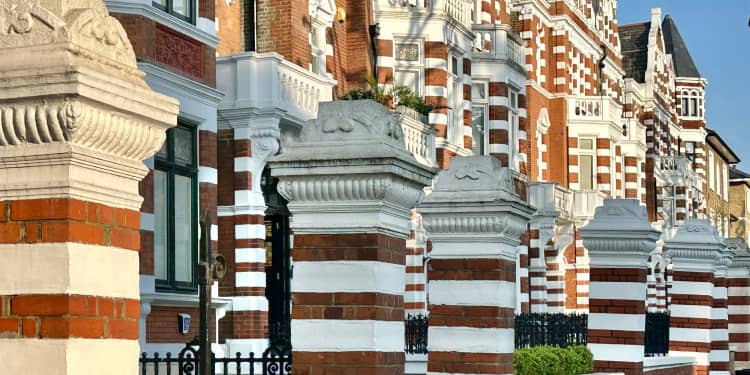
St John’s Wood’s architectural identity is rooted in the early-to-mid Victorian villa development that made it one of London’s first low-density suburbs. The pattern is distinctive: detached and semi-detached villas set back from the road, often with front gardens and generous rear plots, arranged along broad avenues rather than the tight terraced grids found in neighbouring areas.
For a full account of property types, construction periods, and what to look for when buying in St John’s Wood, the companion Property & Architecture guide covers these points in depth.
St John’s Wood has a higher proportion of rental properties than many of its immediate neighbours, partly reflecting the area’s international appeal and the significant number of larger apartments and mansion block flats that suit corporate and diplomatic tenants.
The presence of several international schools and the American School in London (in nearby St John’s Wood Road) has historically sustained demand for short- and medium-term lets from international families.
That said, the dynamic of every street and its individual properties is always changing – so look at our current listings for a sense of homes for rent and sale right now.
| Zone/street type | Predominant tenure | Typical buyer or tenant profile |
|---|---|---|
| Large villa roads (Hamilton Terrace, Avenue Road, Cavendish Avenue) | Owner-occupier | High-net-worth families, long-term residents |
| Central NW8 residential streets | Mixed | Owner-occupiers and longer-term renters |
| Mansion blocks and Park Road apartments | Higher rental concentration | International tenants, corporate lets, professional couples |
| Western fringe | Higher rental concentration | Young professionals, shorter-term renters |
For landlords, the mansion block and apartment stock along Park Road and Wellington Road represents the most liquid part of the rental market, with consistent demand from international tenants and relatively straightforward lettings. The villa roads are predominantly owner-occupied and see less rental activity, though when large houses do come to let, they attract substantial rents from diplomatic and corporate tenants.
While development in this area is restrained, there are also some significant development works underway which are likely to improve the area further…
St John’s Wood Square – The most significant development currently under construction in St John’s Wood is St John’s Wood Square, a 2.2-hectare scheme on the former St John’s Wood Barracks site. The project, which is under construction, was designed by Squire and Partners and is being developed by St John’s Wood Development Ltd, will deliver 179 homes including 11 townhouses, 109 private apartments, 59 affordable flats, a central avenue, a garden square, and a swimming pool within the Grade II-listed Riding School.
The streets closest to the barracks site, Queen’s Terrace and the surrounding roads off Ordnance Hill, are likely to see the most direct impact from this scheme. The creation of a new garden square and the restoration of the listed Riding School will add a significant amenity to this part of NW8, and the streets adjacent to the completed development are likely to benefit from that uplift over the medium term.
The Lord’s View One development – This development has premium penthouses that have sold for over £5 million, which has already demonstrated the values achievable in the Lord’s Cricket Ground vicinity.
For buyers considering streets in the central and northern parts of NW8, the completion timeline of St John’s Wood Square is worth tracking. The scheme is expected to bring new green space and public realm improvements that will benefit the surrounding streets once construction activity concludes.
This varies from buyer to buyer – though certain streets have a reputation for long-standing demand and appeal. Hamilton Terrace, Cavendish Avenue, and Avenue Road are consistently the most sought-after addresses for houses, offering large period villas, wide tree-lined carriageways, and proximity to Regent’s Park.
For flats, the mansion blocks along Park Road and Wellington Road represent the premium end of the apartment market. The right street depends on property type, budget, and whether the priority is park proximity, school catchment, or transport access.
The underground station sits at the junction of Wellington Road and Acacia Road. The streets within closest walking distance include Acacia Road, Elm Tree Road, Queen’s Grove, and the surrounding residential grid in central NW8.
The Jubilee line reaches Bond Street in approximately five minutes and London Bridge in under twenty, making these streets particularly popular with commuters.
The main drivers are plot size and property type, conservation area status, proximity to Regent’s Park, and distance from the Jubilee line. Large detached villas on Hamilton Terrace or Avenue Road may sit in a completely different price bracket from flats on the western fringe, even within the same postcode. Heritage restrictions in the conservation area also limit supply by making it harder to alter or redevelop properties, which supports values on the premium streets.
The streets around the former St John’s Wood Barracks site, particularly Queen’s Terrace and roads off Ordnance Hill, are worth watching as the St John’s Wood Square development completes. The new garden square and public realm improvements will change the character of that pocket considerably. Boundary Road and Abercorn Place also offer value relative to the premier villa roads.
The St John’s Wood Conservation Area is designated by Westminster City Council and covers much of the central and eastern residential core of NW8.
Within the conservation area, permitted development rights are restricted, meaning extensions, alterations to facades, and changes to windows typically require planning permission. This protects the villa character of the area’s most valuable streets but adds complexity for buyers planning significant works. Buyers should confirm the exact boundary with Westminster City Council before purchase.
That depends on the type of property and the buyer’s or tenant’s priorities. The villa roads are predominantly owner-occupied and may see less rental activity. The mansion blocks and larger apartment buildings along Park Road and Wellington Road have a higher concentration of rental properties and consistent demand from international and corporate tenants, making them well suited to landlords. The western fringe has the highest rental concentration and the most accessible entry prices.
NW8 sits at the top of the north-west London price hierarchy for the type of large villa housing it offers, broadly comparable to NW3 (Hampstead and Belsize Park) for houses but typically commanding less than prime SW postcodes for equivalent stock. Within NW8, the eastern and central streets outperform the western fringe significantly.
If you’ve identified a specific street or pocket within St John’s Wood that fits what you’re looking for, or if you’re a seller or landlord trying to understand how your road’s position affects your price, Kubie Gold can give you a precise, street-level view of where the market sits right now. Contact us to speak with someone who knows NW8 in detail, or register as a buyer or tenant if you’d like to stay updated with new properties in the area as soon as they come to market.

Living in Covent Garden: Is London's Most Visited District Actually a Great Place to Live? Forty-four thousand people pass through Coven...

Two streets thirty seconds apart on foot. A £500,000 difference on a comparable flat. That's the reality of buying in Covent Garden, wher...
Tucked behind one of Europe's busiest tourist destinations lies a collection of genuinely quiet residential streets — and some of Central...


