Living in Covent Garden: An Area Guide
Living in Covent Garden: Is London's Most Visited District Actually a Great Place to Live? Forty-four thousand people pass through Coven...


St. John’s Wood is internationally admired and replete with excellent properties spread out across spacious streets and leafy avenues – so what is the area like beyond its celebrated housing market? And, what is it like to live there? Our area guide for homebuyers and tenants explore all you need to know in detail.
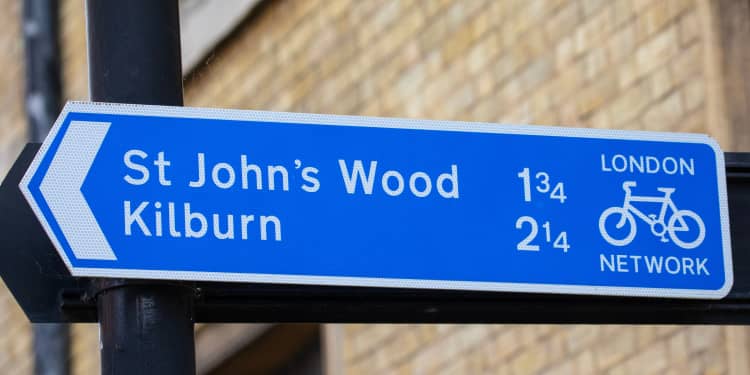
St John’s Wood sits roughly 2.5 miles northwest of Charing Cross, tucked between Regent’s Park to the south, Swiss Cottage to the north, and the Edgware Road to the west. It is one of the few parts of inner London that doesn’t really feel like you’re within inner London: the streets are wide, the buildings are set back, and the general pace is unhurried in a way that most zones 1 and 2 postcodes are not.
St John’s Wood was laid out in the early nineteenth century as a suburb of villas, a deliberate change from the terrace-and-square layouts that define most of Georgian and Victorian London.
Much of that original villa stock has since been replaced by mansion blocks and apartment buildings, but the width of the streets and the scale of the plots have survived. It draws a mix of long-established residents, internationally mobile families, and buyers who want proximity to the West End without the noise that comes with living too close to it.
The case for St John’s Wood starts with what it is not: it is not a busy high street destination, it is not a commuter-belt compromise, and it is not a neighbourhood in the process of becoming something. It is already fully formed, and that stability is part of the appeal.
Practically, the Jubilee line puts Bond Street nine minutes away and London Bridge in under twenty. Regent’s Park is walkable from most of the neighbourhood, and Lord’s Cricket Ground gives the area a cultural anchor that few London postcodes can match. The famous Abbey Road Studios adds a unique appeal to the area that goes well beyond local interest.
For families, the combination of good schools, large housing stock, and low-traffic streets is a serious draw. For buyers at the top of the market, the ongoing St John’s Wood Square development on the former barracks site is adding nearly 180 new homes to a neighbourhood where supply has historically been tight, including preserved heritage buildings centred on a listed 1825 Riding School.
St John’s Wood is genuinely suited to a narrower range of buyers and tenants than most areas of London because it is so different to other locations.
Here’s a general ‘matchmaking’ overview to help you understand whom the area suits best – though the deciding factors will be down to your own, personal preference.
| Buyer/Tenant Type | Best Suited Because | Potential Drawback |
|---|---|---|
| Families with school-age children | Strong school provision, large housing stock, low-traffic streets, proximity to Regent’s Park | High entry prices, flat stock dominates the lower end of the market |
| International and globally mobile buyers | Established expat networks, prestige address, Jubilee line to City and Canary Wharf | Limited nightlife and evening economy |
| Landlords and investors | Consistent rental demand from diplomatic and corporate tenants, low void risk | High acquisition costs compress yields |
| Downsizers | Excellent flat stock, walkable amenities, manageable neighbourhood scale | Limited new-build options at lower price points (until St John’s Wood Square completes) |
| Young professionals seeking nightlife | Not well suited | The evening offer is quiet, neighbouring areas serve this better |
The types of tenants who are typically attracted to the area include diplomatic staff, corporate relocations, and families on international assignments. That makes St John’s Wood one of London’s more reliable rental markets in terms of tenant quality, but it also means rental yields are modest in relation to purchase prices (and upkeep costs).
St John’s Wood is consistently among the most expensive residential districts in London. Average sold prices over the last twelve months according to Rightmove sit at about £2m, with flats averaging around £962,000 and terraced houses considerably higher at around £2.8m. The market is dominated by flats, which represent the majority of property transactions, while detached and semi-detached houses account for a small number of sales at significantly elevated figures.
The most significant recent development is St John’s Wood Square, the 5.5 acre scheme on the former St John’s Wood Barracks site. The project, designed by Squire and Partners and being developed by St John’s Wood Development Ltd, will deliver 11 townhouses, 109 private apartments, and 59 affordable homes, alongside the restored Riding School which is being repurposed as a luxury private leisure hub. Construction is currently underway, with completions expected to extend to 2028.
For a detailed look at specific streets, price differentials, and the architectural character of the housing stock, see our companion guides to St John’s Wood streets and locations and property types.
St John’s Wood is well served by the Jubilee line, which gives it fast, direct access to the West End, City, and Canary Wharf. The area also benefits from nearby Bakerloo line stations and strong bus coverage across the NW8 postcode.
| Mode | Route / Line | Approximate Journey Time |
|---|---|---|
| London Underground | Jubilee line from St John’s Wood station | Bond Street: 9 min; Waterloo: 17 min; Canary Wharf: 28 min |
| London Underground | Bakerloo line from Maida Vale or Warwick Avenue | Oxford Circus: 12 min; Paddington: 8 min |
| Bus | Multiple routes including 139, 189, 46 | Oxford Street: approx. 20 min |
| Road | A41 / A5 northbound; easy access to A40 | Westway/M40 within 10 minutes by car |
The Elizabeth line at Paddington is reachable in under ten minutes by road or bus, extending fast rail access to Heathrow and Reading. Cycle lanes along the canal towpaths connect the area to Little Venice and beyond. No major transport infrastructure changes affecting St John’s Wood are currently confirmed, though broader TfL network improvements continue across the Jubilee line corridor.
Education provision in St John’s Wood is strong at primary level, with a number of well-regarded state and independent schools within or close to the NW8 postcode. Secondary provision is more limited locally, with many families using schools in neighbouring Swiss Cottage or further into Westminster.
| School | Phase | Ofsted Rating | Inspection Date |
|---|---|---|---|
| Arnold House School | Independent school for boys | N/A (ISI inspected) | Sept 2025 |
| The American School in London | Independent (all-through) | N/A (ISI inspected) | December 2024 |
| St Christina’s RC Preparatory School | Independent Prep | N/A (ISI inspected) | March 2025 |
| Harris Academy | State Secondary and Sixth Form | Good | Nov 2019 |
| St Johns Wood Primary School | State Primary | Good | Sept 2019 |
The area’s independent school offer is notable: the American School in London on Loudoun Road is one of the largest American curriculum schools in Europe and is a significant driver of the expatriate family demographic. For state secondary provision, Harris Academy provides education for ages 11-18, while the City of London School and South Hampstead High School are within practical reach, though both are selective. Families considering St John’s Wood should factor in secondary school planning early.
The High Street in St John’s Wood is a self-contained street with independent and high-end retailers rather than a major shopping destination. It has an independent butcher, designer clothing stores, delicatessens and a reliable run of boutiques and lifestyle shops that serve the immediate neighbourhood without the footfall of a town centre. There is also a Tesco Express on Circus Road.
For larger supermarket shops, the Sainsbury’s or the Waitrose at Finchley Road are the nearest alternatives. The West End is nine minutes by tube for anything the High Street does not cover.
The area has a higher than average concentration of independent traders for a neighbourhood of its size. There is no regular outdoor market in St John’s Wood itself, but Camden Market and Marylebone Farmers’ Market are the nearest options.
The food and drink offer in St John’s Wood is low-key rather than limited. The High Street and its immediate surrounds offer some highly rated restaurants including The Ivy, Cinder, Soutine and England’s Grace.
The Clifton on Clifton Hill is a long-established pub with a good reputation locally. Oslo Court, the longstanding French restaurant near Regent’s Park, has operated for decades and retains a loyal following. For a wider restaurant choice, the Marylebone High Street and the Primrose Hill strips are both within easy reach.
The evening entertainment options are limited by London standards but anyone seeking a theatre performance or late-night bars will be able to easily access these options with a short journey on the Tube.
GP provision in St John’s Wood is covered by several practices within the NW8 postcode, including the St John’s Wood Medical Practice on Grove End Road. The nearest major A&E department is at St Mary’s Hospital in Paddington, reachable in under fifteen minutes by car or taxi.
The Wellington Hospital on Wellington Road is a major private hospital with a broad range of specialist services and is one of the largest private hospitals in the UK. Its presence makes St John’s Wood particularly well served for private healthcare access. NHS dental provision in the area is limited, as it is across most of central London; private dental practices are well represented locally.
Regent’s Park forms the southern boundary of St John’s Wood and is the area’s primary green space. At 395 acres, it offers formal gardens, sports pitches, a boating lake, an open-air theatre, and London Zoo at its northern edge. The park is walkable from most of the NW8 postcode within fifteen to twenty minutes.
Primrose Hill, immediately north of Regent’s Park, adds a further 112 acres of open grassland with one of the best elevated views across central London. It is a practical walking destination for St John’s Wood residents and a popular spot for families.
The Regent’s Canal towpath runs along the southern edge of the neighbourhood, connecting Paddington Basin to the west and Camden to the east. It is a flat, car-free route used by cyclists and walkers year-round. Smaller pocket parks and garden squares are distributed through the residential streets.
St John’s Wood falls within the City of Westminster for council tax purposes while rental prices reflect the premium nature of the market.
Below are the council tax bands for Westminster properties in 2026/2027. Automatically included in the council tax bill is the GLA precept – an additional amount required by the Greater London Authority for the upkeep of city services in the region.
| Council Tax Band | Council Tax (£) | GLA Precept (£) | Total (£) |
|---|---|---|---|
| A | 358.23 | 340.34 | 698.57 |
| B | 417.93 | 397.06 | 814.99 |
| C | 477.64 | 453.79 | 931.43 |
| D | 537.34 | 510.51 | 1,047.85 |
| E | 656.75 | 623.96 | 1,280.71 |
| F | 776.16 | 737.40 | 1,513.56 |
| G | 895.57 | 850.85 | 1,746.42 |
| H | 1,074.68 | 1,021.02 | 2,095.70 |
Rental values can vary drastically from property to property in St. John’s Wood. Even so, we thought it would be helpful to include some provisional figures you can expect to see when looking for your next home to rent.
For real examples – including more premium homes to rent – head over to our property listings and explore the current price points.
| Rental property size | Typical rental value |
|---|---|
| One-bedroom flat | From approx. £2,500 pcm |
| Two-bedroom flat | From approx. £3,500 pcm |
| Three-bedroom house | From approx. £6,000 pcm |
Westminster’s council tax rates are among the lowest in London, which partly offsets the high cost of property and rent. Car ownership is common, though a resident parking permit and the Congestion Zone proximity are additional costs worth factoring in.
St John’s Wood has a settled, established character that does not change much from year to year, and that consistency is something its residents value. The High Street is a genuine local hub: people shop there, eat there, and socialise there. There is a strong community feel, which is less common in other areas of inner London.
The area has a well-documented international character, driven by the American School and the concentration of diplomatic residences.
Lord’s Cricket Ground is a seasonal focal point, too. Test match days bring a particular energy to the streets around the ground, and the cultural presence extends beyond cricket into the broader life of the neighbourhood. Abbey Road Studios, while not a public venue in the conventional sense, draws a steady stream of visitors to the famous zebra crossing to take photos and has given the area a cultural identity.
The St John’s Wood Society is an active local civic group that has been involved in planning decisions and conservation matters for decades, including in relation to the St John’s Wood Square development. Its presence reflects the degree to which residents engage with the long-term character of the area.
Yes, for families with the budget to match. The combination of large housing stock, good primary schools (including the American School in London for internationally mobile families), low-traffic streets, and direct access to Regent’s Park makes it one of the more practical family-oriented neighbourhoods in inner London.
St John’s Wood is one of London’s most expensive residential areas. Average sold prices over the last twelve months are around £2m, with flats averaging around £962,000 and terraced houses considerably higher.
It is well connected to the West End, City, and Canary Wharf. The Jubilee line from St John’s Wood station reaches Bond Street in nine minutes and London Bridge in under twenty. The Bakerloo line at nearby Maida Vale and Warwick Avenue adds further coverage. Bus services are reliable, and the Elizabeth line at Paddington is ten minutes by bus or road.
It can be, though yields are modest relative to purchase prices. The rental market is driven by diplomatic tenants, corporate relocations, and international families, which tends to produce reliable, low-void lettings at the cost of lower percentage returns. Investors prioritising capital preservation and tenant quality over yield will find it more compelling than those seeking income-focused returns.
St John’s Wood is quieter and more residential than either. Primrose Hill has a stronger independent food and drink scene and a more visible street life; Marylebone has a broader retail and restaurant offer. St John’s Wood has more space, larger housing stock, and a calmer day-to-day feel.
St John’s Wood Square is a major residential development on the site of the former St John’s Wood Barracks, delivering 11 townhouses, 109 private apartments, and 59 affordable homes, alongside a restored 1825 Riding School.
One-bedroom flats typically start from around £2,500 pcm, with two-bedroom flats from approximately £3,500 pcm and larger family houses from £6,000 pcm upwards. Westminster’s council tax rates are low by London standards, which provides some offset, but St John’s Wood sits firmly at the premium end of the London rental market.
Whether you are buying, selling, letting, or looking for a home to rent in St John’s Wood, Kubie Gold can give you straightforward advice on the local market and the property options available. You can register as a buyer (or tenant) to be updated on the latest local properties, or book a rental valuation for your property in Maida Vale as a landlord.

Living in Covent Garden: Is London's Most Visited District Actually a Great Place to Live? Forty-four thousand people pass through Coven...

Two streets thirty seconds apart on foot. A £500,000 difference on a comparable flat. That's the reality of buying in Covent Garden, wher...
Tucked behind one of Europe's busiest tourist destinations lies a collection of genuinely quiet residential streets — and some of Central...


