Living in Covent Garden: An Area Guide
Living in Covent Garden: Is London's Most Visited District Actually a Great Place to Live? Forty-four thousand people pass through Coven...


Choosing which street to purchase a property on in Covent Garden will not only influence how much you pay, there are also distinct differences in architectural features, how busy it gets and how close you are to green space – so keep reading to find out the best place for you to buy, rent or invest.
A Georgian terrace overlooking a quiet courtyard can share a postcode with a conversion above a row of restaurants, while delivering a very different living experience.

While it is common for large price variation even in the same postcode in Central London, this scenario is very apparent in Covent Garden and getting the street right matters.
Covent Garden occupies the WC2E and WC2B postcodes, with a small amount of WC2N to the south-east. The estate at its heart, managed by Shaftesbury Capital, was valued at £2.7 billion following a landmark investment by Norway’s sovereign wealth fund NBIM in April 2025, which acquired a 25% stake. That confidence reflects what buyers already know: this is one of the most resilient and consistently sought-after patches of Central London, with footfall exceeding 40 million visitors a year. But none of that makes every street equally desirable to live on.
This guide will help you understand what the different streets are like across this internationally renowned area.
The streets that tend to command the highest prices in Covent Garden share a common set of characteristics.
These characteristics are Georgian or early Victorian architecture in good original condition, relatively quiet despite proximity to the Piazza, and a residential rather than commercial ground-floor character. The premium here is driven by scarcity as much as by quality, as genuinely residential streets within the WC2 postcode are rare.
Street-level HM Land Registry data at individual road level within WC2 is limited by transaction volume, as many streets complete only a handful of sales in any given year, so per-street averages can swing significantly. The latest house price data on Rightmove shows that the WC2E postcode district has an average house price of £1,460,214 in the 12 months up to August 2026.
Sold prices for flats are broadly in the range of £500,000 to £4m, with significant variation by floor, aspect, and building type. Freehold houses, where they exist, trade above this range.
Covent Garden divides into three reasonably distinct zones, each with its own character, price point, and practical profile.
| Zone | Character | Who it suits | Price indicator |
| The Piazza & Market Core | High footfall, tourist-facing, mixed residential & commercial | Investors & pied-à-terre buyers | Upper range, premiums for lower noise levels |
| Seven Dials & Neal’s Yard | Quieter, independent retail, more residential feel | Owner-occupiers & young professionals | Slightly below Piazza core on like-for-like homes |
| Southern fringe (Strand/Aldwych edge) | More office-heavy, less residential stock | Investors & professionals working in WC2 | Broader range – depends heavily on building |
The Piazza and Market Core covers the streets immediately surrounding the central market building: Russell Street, Bow Street, and the eastern end of Long Acre. Living here means accepting significant daytime and evening footfall, which makes ground-floor and lower-floor units less appealing for owner-occupiers. Upper-floor units with south or west-facing aspects command a clear premium over equivalent space facing the street.
Seven Dials and Neal’s Yard, straddling the WC2H boundary, offer a noticeably different feel. The seven-street junction at Seven Dials creates a pedestrian-friendly network of independent shops, smaller cafés, and quieter residential streets. Neal’s Yard, tucked behind Short’s Gardens, is one of the few genuinely quiet courtyard spaces in this part of Central London. Buyers who have already researched the broader area tend to gravitate here once they understand the trade-off between address prestige and liveability.
The southern fringe, running towards the Strand and Aldwych, is heavier on office stock and lighter on residential. Streets like Exeter Street and Catherine Street have some residential conversion and the pocket tends to suit investors more than owner-occupiers.
The Covent Garden Conservation Area spans parts of the City of Westminster and London Borough of Camden, and covers the majority of the historic street grid. Designation means that alterations to external appearances require consent, which has helped preserve the Georgian and Victorian building stock that drives much of the premium. Buyers should check which authority covers their specific street, as the boundary between Camden and Westminster runs through the estate.
Residential buyers with children face a particular challenge in WC2 as the catchment geography is complex. The most relevant schools for families in the Covent Garden area include St Joseph’s RC Primary in Macklin Street (WC2B) and the independent sector, which many families in this postcode opt towards. Catchment boundaries are reviewed annually – check directly with the relevant local authority for current admissions information before purchasing with a school place in mind.
Covent Garden tube station on the Piccadilly line sits at the heart of the estate, on Long Acre and is one of the most used stations in the area. Streets within a short walk of the station such as Long Acre, Floral Street, James Street, offer the strongest transport access for Piccadilly line users.
For those using the Central line, Holborn station is a five-minute walk east along High Holborn, making the northern streets of the estate (Endell Street, Neal Street) reasonably well-served by two lines. Leicester Square station, serving the Northern and Piccadilly lines, is equally accessible from the southern and western streets.
These are the dominant drivers for flat buyers. A top-floor flat with a lift in a converted Georgian building on Henrietta Street will trade at a significant premium over a ground-floor unit in the same building. Where buildings lack lifts, upper floors can actually trade at a discount, reversing the usual logic.
This matters more here than in most residential areas. Streets facing the Piazza or running parallel to major pedestrian routes carry a noise premium that is real and measurable. Units facing internal courtyards or quiet rear aspects are likely to achieve more than equivalent front-facing units in the same building.
Whether a home is freehold or leasehold has an outsized effect in WC2, because most residential stock is leasehold, and short leases are common in converted commercial buildings. A flat with 80 years or fewer on the lease will trade at a meaningful discount. Buyers should check lease length carefully before comparing prices across buildings.
Not every street in Covent Garden is well known, but nonetheless, many of these streets have valuable properties and perks which are not always reflected in the price tag. Here’s a few lesser-known streets that are worth considering as a buyer, tenant or investor:
Whether these streets will close the gap with the premium addresses is, to some extent, tied to Shaftesbury Capital’s ongoing investment programme across the estate and the continued evolution of Seven Dials as a destination in its own right.
Covent Garden is heavily weighted towards the private rented sector. The combination of a WC2 postcode, proximity to the West End, and a predominantly leasehold flat stock makes it a natural investor market, and a significant proportion of the residential units across the estate are let rather than owner-occupied.
The Seven Dials and Neal’s Yard pocket has a slightly higher proportion of long-term owner-occupiers than the immediate Piazza area, where short-let activity (including serviced apartments) has historically been more prevalent. Buyers who want a building with a stable, predominantly owner-occupier character should check the tenure mix in any specific building before purchasing, as this can vary significantly even within a single street.
For landlords, the rental demand profile is strong across the estate. Tenants are typically professionals working in the West End, legal and media sectors, or the creative industries. One and two-bedroom flats are the most popular types of rental. Larger lateral conversions and any available houses attract a different tenant profile: typically corporate lets, senior professionals, or families using the property as a London base.
| Area | Predominant tenure | Typical buyer/tenant profile |
| Piazza core | Private rented (high short-let mix) | Investors, corporate tenants, pied-à-terre buyers |
| Seven Dials / Neal’s Yard | Mixed, slightly more owner-occupied | Owner-occupiers, long-term professional tenants |
| Long Acre / Floral Street laterals | Private rented | Buy-to-let investors, corporate lets |
| Southern fringe | Private rented | Professional tenants, investors |
This information should be taken as directional, as the exact amount of ownership vs. rental properties is always changing.
The most significant recent development affecting the area is the opening of the Guinness Open Gate Brewery at Old Brewer’s Yard in late 2025. The £73 million venue, which King Charles III officially opened, transforms a 54,000 sq ft site that had been underused for years. Its location on the western edge of the estate, close to the junction of Neal Street and Shelton Street, is likely to increase footfall on streets that were previously quieter. For buyers on those streets, there are pros and cons as the improved amenity and the profile it brings to the western estate are positive, but additional evening footfall on previously quiet streets is a consideration for owner-occupiers.
Shaftesbury Capital’s ongoing investment programme across the estate continues to include public realm improvements and active management of the retail and food-and-drink mix. Arcade Covent Garden, a new food hall built on a former TGI Fridays site, has added further footfall to the Piazza-adjacent streets. Buyers on streets bordering the market building should factor in the continued evolution of the estate’s commercial offer.
The Piccadilly line serves Covent Garden station, and while no major station upgrade project is currently scheduled for WC2, the Elizabeth line’s opening has already affected travel patterns across Central London, with Tottenham Court Road station (a ten-minute walk north-west) now offering direct services to Heathrow, Canary Wharf, and Reading. Streets in the northern part of the estate, particularly around Neal Street and Endell Street, are among the best-placed to benefit from that connection on foot.
Buyers should monitor Camden Council’s planning portal for any proposals affecting specific buildings on the estate, where Shaftesbury Capital has indicated ongoing consultation across a number of properties.
Having worked through the street-level detail, the logical next step is a conversation with an agent who knows which specific units within these streets are worth pursuing. Whether you’ve identified a particular pocket or you’re still weighing the Piazza core against Seven Dials, you can register as a buyer or tenant for more information, or begin searching for properties directly.
Henrietta Street and Maiden Lane consistently rank among the most sought-after addresses, offering Georgian period stock in a relatively quiet setting near the Piazza. For buyers who prioritise space over period character, the lateral conversions on Long Acre and Floral Street are the strongest option. Seven Dials and Short’s Gardens offer good value within the broader estate for those wanting a calmer residential environment.
The main price drivers are floor level and lift access, aspect (courtyard-facing units command a significant premium over street-facing equivalents), lease length, and proximity to tourist footfall. A top-floor rear-aspect flat with a long lease can differ by several hundred thousand pounds from a ground-floor street-facing unit in the same postcode, even for the same square footage.
Macklin Street and Short’s Gardens are two less-discussed residential streets that offer genuine Covent Garden addresses at a slight discount to the premium roads. The opening of the Guinness Open Gate Brewery at Old Brewer’s Yard has also drawn attention to the western edge of the estate around Shelton Street, which may attract increased buyer interest as the venue establishes itself.
Yes, it matters in practice. Planning consent requirements, council tax rates, and some local services differ between the two boroughs, and the conservation area designation applies differently depending on which authority covers the specific building. Buyers should confirm the relevant borough before exchanging contracts.

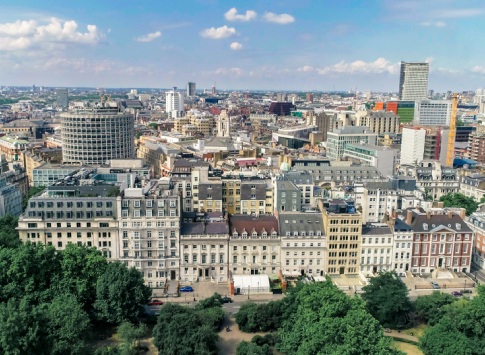
Living in Covent Garden: Is London's Most Visited District Actually a Great Place to Live? Forty-four thousand people pass through Coven...
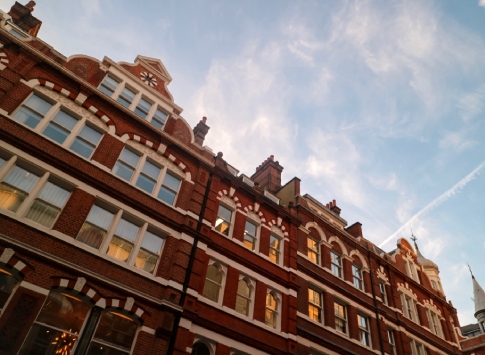
Tucked behind one of Europe's busiest tourist destinations lies a collection of genuinely quiet residential streets — and some of Central...
Few London neighbourhoods manage to feel genuinely spacious whilst sitting minutes from the West End, but St John's Wood pulls it off. ...


