Fitzrovia: Best Streets & Locations Guide
Two streets in Fitzrovia can look identical on paper yet feel worlds apart in reality. With prices averaging £1.43m and borough boundar...


Covent Garden is one of the most vibrant parts of London, a prime central location close to the famous theatres in the West End and walking distance from many of the London attractions.
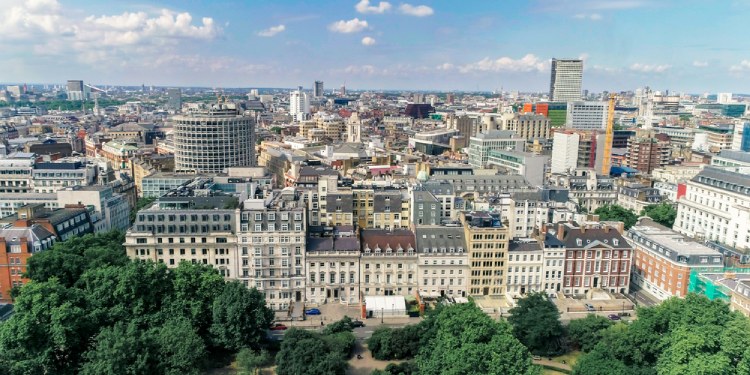
Popular with tourists, the area is also a very appealing place to live, it sits in the London Borough of Camden and the City of Westminster,offering convenient, walkable access for professionals working in the City from a unique residential setting.
Located in the heart of the West End, the Strand provides a border to the south, with Holborn to the north, Kingsway to the west and Drury Lane to the east. The area is defined by its Georgian and Victorian architecture, its covered market piazza, its concentration of theatres and, in 2025, Norges Bank Investment Management, acquired a 25% stake in the Covent Garden estate for £570 million, valuing the estate at £2.7 billion in total. That kind of investment signals long-term confidence in the area’s commercial and cultural standing.
People who choose to live here want to be within walking distance of the West End’s theatres and restaurants, they value the Tube connections, and they are generally prepared to trade garden space and quiet streets for proximity to everything. The residential population is made up largely of professionals, people working in media, law, or the arts, and a proportion of international buyers.
One of the most common reasons people want to live in this exclusive area is the access it provides. From Covent Garden, you can walk to the City in under half an hour, reach the Jubilee line at Waterloo in fifteen minutes on foot, and step out of your front door into a concentration of theatres, restaurants and cultural venues. The Royal Opera House is on your doorstep. The London Transport Museum is a short walk away.
Beyond the obvious, Covent Garden has a physical character that sets it apart from other parts of central London. The Georgian grid of streets around the piazza, the covered market building, and the network of lanes connecting Neal’s Yard to Long Acre give it an identity that newer developments rarely achieve. Shaftesbury Capital, which manages the estate, has continued to invest in the public realm, and the Christmas 2025 season saw more than 300,000 lights installed across the piazza, Seven Dials and surrounding streets, with a 55-foot British-grown Christmas tree at its centre.
The area is also changing in ways that add to its residential appeal rather than detracting from it. The £73 million Guinness Open Gate Brewery, which opened in December 2025 at Old Brewer’s Yard and was officially opened by His Majesty The King, brings a working microbrewery and food destination to a site that has been brewing beer for over 300 years. Arcade Covent Garden, a new food hall that opened in May 2026 occupies the former TGI Fridays site, and adds a further layer of independent food and drink to an already well-served area.
| Buyer or tenant type | Best suited because | Potential drawback |
| Young professionals | Superb transport links, walkable to the City and West End employers, strong rental demand if investing | Limited flat stock, high price per sq ft |
| Landlords and investors | Institutional backing, strong footfall, consistent rental demand from professionals and corporate tenants | Entry costs are high; gross yields compressed by capital values |
| Arts and culture workers | Proximity to the Royal Opera House, West End theatres, and London’s creative industries | Noise and footfall from daily visitors |
| International buyers | Globally recognised address, Shaftesbury Capital-managed estate, strong long-term capital case | Residential stock is limited and competition is intense |
| Families | Central location, excellent transport | Limited family-sized homes, no large green space within the immediate area, school options require planning |
| Downsizers | Walkable, amenity-rich, no car needed | High cost base; the pace of the area is not to everyone’s taste |
The area is genuinely less well suited to buyers prioritising outdoor space, large family homes, or a quieter residential feel. Those priorities are better served by looking at Bloomsbury to the north, or Southwark and Bermondsey across the river.
Residential stock in Covent Garden is limited by the simple fact that the estate is overwhelmingly commercial. The properties that do exist tend to be conversions above retail units, warehouse-style apartments, and a smaller number of period flats in the Georgian streets around the piazza. New-build residential development within the core is rare.
Price data for WC2 specifically reflects this scarcity. Central London WC2 properties have consistently ranked among the most expensive in the country by price per square foot, with flats typically transacting well above the central London average.
The £2.7 billion institutional valuation of the estate, underpinned by Norway’s sovereign wealth fund investment in April 2025, reflects the long-term confidence in the area’s commercial and residential appeal. For landlords, the tenant pool is consistent: corporate tenants, professionals working in the legal and creative sectors, and a proportion of short-term executive lets. Gross yields are compressed by high capital values, but void rates tend to be low.
For a detailed look at specific property types, architectural character and street-by-street analysis, see our companion Property and Architecture guide.
Covent Garden is one of the best-connected locations in London. The station serves the Piccadilly line directly, but the broader area gives access to multiple lines within a short walk.
| Transport type | Route/line | Journey times to key areas |
| London Underground (Piccadilly line) | Covent Garden station | King’s Cross: 5 min; Heathrow T2/T3: 50 min |
| London Underground (Central line) | Holborn station (5-min walk) | Bank: 8 min; Liverpool Street: 12 min |
| London Underground (Jubilee/Northern lines) | Waterloo station (15-min walk) | London Bridge: 4 min; Canary Wharf: 11 min |
| National Rail | Charing Cross station (12-min walk) | London Bridge: 4 min; Sevenoaks: 45 min |
| National Rail | Waterloo station (15-min walk) | Clapham Junction: 8 min; Woking: 27 min |
| Bus | Multiple routes on the Strand and Kingsway | City, Southwark, Bloomsbury: 15–25 min |
| Cycling | Santander Cycles docking stations throughout the area | City of London: 15–20 min |
Covent Garden is also a very walkable location. The City of London is reachable on foot in around 25 to 30 minutes; Soho, Bloomsbury and the South Bank are all under 20. Elizabeth line access is available from Farringdon (25-minute walk) or Tottenham Court Road (15-minute walk via Oxford Street).
No significant new transport infrastructure is currently planned specifically for this area, though broader TfL network improvements continue to benefit the surrounding zone.
Want to know more? Explore the best streets in central London and compare the types of property in central London.
Covent Garden’s residential population is small enough that its immediate catchment for schools is limited.
Families in the area draw on provision across Camden and Westminster, and competition for places at the better-rated schools is significant given the density of demand across central London.
| School | Phase | Ofsted rating | Inspection date |
| St Joseph’s RC Primary School, Macklin Street | Primary | N/A (new rating system but most key areas rated Outstanding) | April 2025 (Ofsted) |
| Oasis Academy Johanna, Lambeth | Primary | Good | Dec 2024 (Ofsted) |
| St Clement Danes Church of England Primary School | Primary | N/A (new rating system but all key areas rated Outstanding) | Nov 2024 (Ofsted) |
| London Academy of Excellence (sixth form, Stratford) | Post-16 | Outstanding | March 2024 (Ofsted) |
| Westminster City School (Boys School) | 11-18 | N/A (new rating system) | May 2026 (Ofsted) |
Ratings above are sourced from Ofsted inspection reports; families should verify current ratings directly as inspections are ongoing. In practice, families living in WC2 often look further afield, to schools in Bloomsbury, Holborn, or across the borough boundaries into Lambeth and Southwark. Independent school provision is strong within a short distance: the Lycée Français Charles de Gaulle is a French co-educational school in South Kensington that is accessible by Tube, and several well-regarded prep schools operate within 20 minutes.
Families looking to move to Covent Garden should plan ahead as school places require early registration and, in many cases, a willingness to look beyond the immediate postcode.
Covent Garden is, by most measures, one of the most comprehensively stocked retail locations in Europe. The estate managed by Shaftesbury Capital includes brands across the full spectrum: Apple, Chanel, Tissot, and Ladurée sit alongside recent openings including Diptyque, Alo Yoga, and Charlotte Tilbury. Seven Dials, a short walk from the piazza, has developed a particularly strong independent retail identity, with a mix of fashion, homeware, and speciality food.
For day-to-day essentials, there is a Sainsbury’s Local, M&S Simply Food, Tesco Express and further options along the Strand. Neal’s Yard Dairy has its original shop in Neal’s Yard and remains one of the area’s most distinctive independent retailers. The area does not have a large-scale supermarket, which is worth bearing in mind if you want to shop frequently.
Leisure in Covent Garden is anchored by the Royal Opera House, the London Transport Museum, and the Theatre Royal Drury Lane. The covered market building itself hosts a mix of independent traders, crafts, and regular events throughout the year.
The food and drink offer in Covent Garden is extensive, though it ranges considerably in quality. The piazza itself attracts a high volume of tourist footfall, and some of the most prominent sites reflect that in their pricing and offer.
Arcade Covent Garden, which opened in 2025 in the former TGI Fridays site, brings a food hall format with a chef-led Greek-Cypriot taverna, a Southern Thai eatery, and New York pizza concept Gracey’s alongside its in-house brands including Solis (South American grill), Hero (North Indian fast food), and Manna (smashburger). It represents a shift toward independent, chef-driven food in a location that has historically leaned toward more popular chains.
The Guinness Open Gate Brewery operates as a working microbrewery and visitor experience, with tours running daily from £30 per person. It occupies a 54,000 sq ft site and produces limited-edition craft beers alongside its core range – so well worth a visit.
Longer-standing venues include The Lamb and Flag on Rose Street, one of central London’s oldest pubs, which can be verified as currently trading. Rules Restaurant on Maiden Lane, reportedly London’s oldest restaurant, remains open and is a well-known fixture. The area’s pub and bar scene is dense and varied, with options ranging from traditional boozers to cocktail bars in the Seven Dials area.
GP access in central London is generally more constrained than in outer boroughs, and Covent Garden is no exception. Residents register with surgeries in the surrounding area, with practices operating under both Camden and Westminster CCG boundaries. The Covent Garden Medical Centre on Short’s Gardens has historically served the local residential population, and further options exist along the Strand and into Holborn.
For urgent care, University College Hospital on Euston Road is the nearest major hospital with a full A&E department, accessible in around 15 minutes by Tube or 25 minutes on foot. St Thomas’ Hospital, on the South Bank, is reachable in a similar timeframe via Waterloo. Dental provision follows a similar pattern: NHS dental places in central London are limited, and many residents use private practices. There are several private dental clinics operating within the WC2 area. For current GP registration and CQC ratings, NHS.uk and CQC carry up-to-date information.
Covent Garden is one of the few parts of London where green space genuinely requires a short journey. Within the immediate area, Lincoln’s Inn Fields, a short walk north into Holborn, is the largest public square in London and provides an open space with benches, a bandstand, and a café. It is popular with workers and residents at lunchtime and remains one of central London’s most underrated green spaces.
To the south, Victoria Embankment Gardens runs along the north bank of the Thames between Hungerford Bridge and Temple and offers a formal garden setting with riverside views. St James’s Park and Green Park are reachable on foot in around 20 to 25 minutes, or a few minutes by Tube, and together provide the kind of expansive parkland that Covent Garden itself cannot offer.
Residents who want to who use parks at weekends and evenings will find central London’s royal parks greatly appealing.
| Cost item | Indicative figure or band |
| Council tax (Camden, Band D, 2024/25) | £2,207.12 per year (Camden Council, 2026/27) |
| Council tax (Westminster, Band D, 2024/25) | £1,047.85 per year (Westminster City Council, 2026/27) |
| Average private rent, one-bedroom flat (WC2 area) | £2,500–£4,800 per month (Zoopla data August 2026) |
| Average private rent, two-bedroom flat (WC2 area) | £3,500–£6,000+ per month (Zoopla data August 2026) |
The council tax split reflects the fact that Covent Garden straddles both Camden and Westminster; Westminster’s rate is notably lower, which is a meaningful factor for residents and landlords on the Westminster side of the boundary. Rental figures above are indicative ranges drawn from property portals for the WC2 area – actual rents vary significantly by floor, spec, and building.
Residents without a car save considerably on parking and transport costs, as the area’s walkability and Tube access make car ownership largely redundant.
Covent Garden is not a quiet neighbourhood in any conventional sense, and its residents know this.
The piazza sees street performers drawing large street crowds, and the area’s 13.52 million annual Tube journeys give some sense of how busy it is. What residents describe, however, is a neighbourhood that empties in a specific way: when the theatres close and the last diners leave, the streets around the residential streets off Long Acre and in the Seven Dials grid become genuinely quiet.
The area has a strong theatrical and arts identity that goes beyond the Royal Opera House and the West End stages. Neal’s Yard has maintained its independent character since the 1970s and remains a distinctive pocket within the wider estate. The Christmas season is a significant community event, with the 2025 decorations covering the piazza, Seven Dials and Neal’s Yard in a coordinated scheme described by Shaftesbury Capital as “The Theatre of Christmas.”
The independent food and retail scene is growing rather than contracting. The opening of Arcade Covent Garden in 2025 and the Guinness Open Gate Brewery are evidence that operators continue to see the area as a serious destination rather than a tourist trap to be managed. For residents, this means that the area’s offer continues to improve.
Covent Garden is one of central London’s most sought-after addresses, and navigating its limited residential market takes local knowledge. Whether you’re buying a home, considering an investment property, or looking to rent in WC2, Kubie Gold works across central London and can help you find the right fit. Contact us to discuss what you’re looking for.
Covent Garden suits buyers and renters who prioritise access to central London’s cultural and commercial life over green space or quiet streets. The residential population is small but established, and the area is genuinely hard to beat for location. It is less well suited to families seeking outdoor space or buyers on a tighter budget.
Residential property in Covent Garden is among the most expensive in London by price per square foot, reflecting its location and the scarcity of residential stock. The WC2 postcode consistently records high transaction values in HM Land Registry data.
Yes. Covent Garden Tube station sits on the Piccadilly line, with Holborn (Central line) and Waterloo (Jubilee and Northern lines) both within a short walk. Charing Cross and Waterloo mainline stations extend connections further.
One-bedroom flats in the WC2 area typically let for between £2,500–£4,800 per month based on property portal data for 2026, with two-bedroom properties ranging from £3,500 upwards. Council tax rates differ depending on whether a property falls in Camden or Westminster, with Westminster’s rate notably lower.
The structural case is strong: the Covent Garden estate was valued at £2.7 billion following Norway’s sovereign wealth fund investment in April 2025, and rental demand from professionals and corporate tenants is consistent. Gross yields are compressed by high capital values, but void rates tend to be low and long-term demand is well established.


Two streets in Fitzrovia can look identical on paper yet feel worlds apart in reality. With prices averaging £1.43m and borough boundar...

Most buyers arrive in Fitzrovia expecting neat rows of Georgian terraces. What they find instead is one of central London's most archit...

Fitzrovia: London's Best-Kept Central Secret Zone 1 address. Three Underground lines within walking distance. Quiet Georgian streets. An...


