Living in Covent Garden: An Area Guide
Living in Covent Garden: Is London's Most Visited District Actually a Great Place to Live? Forty-four thousand people pass through Coven...


People who are drawn to Covent Garden are primarily driven by the prestige of the location, central London accessibility and the distinct architectural property features.
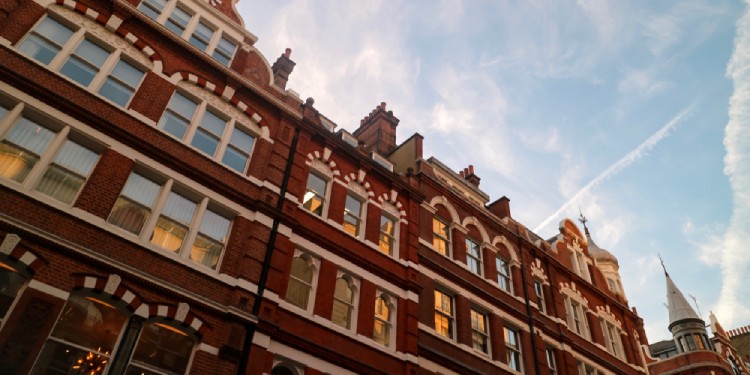
As one of the most visited destinations in Europe, it is not considered a tranquil location but the residential streets tucked behind the Piazza remain genuinely quiet once you know where to look.
The area’s housing stock is overwhelmingly made up of converted flats within Georgian and Victorian buildings, with a smaller number of purpose-built mansion blocks and a very limited supply of genuinely self-contained houses. Covent Garden was always more commercial and institutional than domestic, and residential properties have been gradually added over centuries of adaptation.
What survives is a stock of considerable architectural quality, concentrated in a compact geography and protected by some of the most tightly drawn conservation designations in Central London.
What makes Covent Garden distinct from comparable Central London locations, such as Bloomsbury to the north or Soho to the west, is the degree to which its been preserved. Much of the area was laid out by the Bedford Estate from the 1630s onwards, and successive waves of development in the Georgian and Victorian periods added to rather than demolished what came before.
Explore the kind of properties you can find in the Covent Garden area below.
The table below summarises the main property types found in Covent Garden; each is covered in more detail afterward.
| Property Type | Typical Period | Typical Tenure | Approximate Price Range |
| Converted flat (Georgian) | 1720s–1830s | Leasehold | £600,000–£2m+ |
| Converted flat (Victorian/Edwardian) | 1840s–1910s | Leasehold | £500,000–£1.5m |
| Purpose-built mansion flat | 1880s–1930s | Leasehold | £700,000–£2m+ |
| Whole townhouse | Georgian/Victorian | Freehold or long leasehold | £3m–£8m+ |
| New build/conversion flat | 2000s–present | Leasehold | Varies |
1720s–1830s, Leasehold, £600,000 – £2m+
Converted flats in Georgian townhouses form the single largest component of Covent Garden’s residential stock. These are typically found on the upper floors of four- or five-storey terraces, with the lower floors historically given over to commercial use.
Georgian builders optimised for height and proportion rather than lateral space, so a flat described as a one-bedroom in this stock often occupies a full floor of a narrow terrace, with rooms of genuine elegance but limited storage, and buyers should expect relatively compact footprints as a result.
Characteristics
Georgian terraces in Covent Garden were built to serve a prosperous but working population of merchants, lawyers, and tradespeople rather than the aristocracy. The architecture is restrained rather than grand, and the proportions are domestic rather than palatial. Well-preserved examples on streets such as Henrietta Street and King Street show the original character clearly.
Outside space
The area’s Georgian and Victorian building stock was designed for urban density, and the vast majority of flats have no private outdoor space beyond a window ledge or, in better cases, a Juliet balcony. Where it exists, it typically takes the form of a roof terrace created by a previous conversion, or a small courtyard at the rear of the building.
Ground-floor and lower-ground-floor flats occasionally have access to a rear yard or light-well, though these are rarely landscaped gardens in any meaningful sense. Buyers who regard outside space as essential should factor this into their search criteria from the outset, as the supply of flats with genuine terraces or gardens is narrow.
1840s–1910s, Leasehold, £500,000–£1.5m
Victorian conversions follow a similar pattern to their Georgian counterparts, concentrated on streets where commercial and residential uses co-existed throughout the 19th century. These tend to offer slightly more robust construction, with thicker party walls and better sound separation than some Georgian stock, though the quality of conversion work varies considerably.
Characteristics
Victorian development in Covent Garden was concentrated on the edges of the established Georgian grid, particularly along Long Acre and toward the Strand. The commercial character of these streets means that many Victorian buildings were purpose-built for mixed use, with residential accommodation always occupying upper floors above ground-floor retail or warehousing.
Structural walls in this stock are typically solid brick, which has implications for damp management and insulation.
Outside space
As with Georgian conversions, private outdoor space is rare with this type of housing stock. Where it exists, it follows the same pattern of occasional roof terraces, rear courtyards, or a yard/light-well on ground-floor flats.
1880s–1930s, Leasehold, £700,000–£2m+
Purpose-built mansion blocks are less common here than in Bloomsbury or Marylebone, but a number of late-Victorian and Edwardian examples exist, particularly toward the fringes of the area, with porter services in some cases.
Characteristics
Edwardian and inter-war buildings in Covent Garden tend to appear on the fringes of the area where earlier buildings were cleared for wider streets or institutional uses. Purpose-built mansion blocks from this period, where they exist, offer buyers more consistent floor plans and service charge structures that reflect a single building type rather than an accumulated patchwork of adaptations.
Outside space
Mansion blocks from the Edwardian period sometimes include communal gardens or shared courtyard space, which can partially address the absence of private outdoor areas.
Georgian/Victorian, Freehold or long leasehold, £3m–£8m+
Whole houses are rare and expensive. Where they do appear, they are typically Georgian or early-Victorian terraces that have been brought back into single-family occupation after decades of subdivision, and they carry price tags that reflect both the scarcity and the cost of that restoration work.
2000s–present, Leasehold, Varies
New build stock is limited. The area’s conservation framework makes large-scale clearance and redevelopment impossible, so new units tend to emerge from conversion of former commercial or institutional buildings rather than ground-up construction. See Recent Developments in Covent Garden, below, for how this pipeline is currently shaping up.
Covent Garden sits within one of the most comprehensively designated stretches of Central London.
The core area falls within the Covent Garden Conservation Area, designated by the London Borough of Camden (for the northern portion) and the City of Westminster (for the southern and eastern portions), reflecting the fact that the area straddles two local authority boundaries.
Historic England records a substantial number of listed buildings across the Covent Garden area. The most significant is the Church of St Paul, Covent Garden, designed by Inigo Jones and completed in 1633, which is listed at Grade I, the highest designation, and is the dominant architectural set-piece of the Piazza. The Royal Opera House on Bow Street is also listed, as are numerous individual terraces and townhouses on Long Acre, King Street, Henrietta Street, and the surrounding grid.
For buyers, listed building status on a residential property carries specific obligations. Any works that affect the character of a listed building, internally as well as externally, require Listed Building Consent in addition to standard planning permission where that also applies.
The Seven Dials area falls within its own conservation area to the immediate west, and is notable for the 17th-century street pattern centred on the column at the junction of seven streets. Properties on the streets leading away from Seven Dials are subject to similar restrictions.
Large-scale new-build residential development in Covent Garden is effectively impossible given the conservation framework and the density of existing listed buildings. The residential stock does not grow materially through ground-up construction.
The most significant recent development story in the area is commercial rather than residential. The Acre, a newly converted office development in Covent Garden completed in 2025, has achieved high sustainability accreditations. The continued inward investment in the area’s commercial fabric supports long-term demand for residential property nearby.
Shaftesbury Capital, which manages the majority of the Covent Garden estate, sold a 25% stake to Norway’s Norges Bank Investment Management (NBIM) in April 2025 for £570 million, valuing the estate at £2.7 billion. While this transaction concerns commercial and retail property rather than residential, it signals the long-term confidence in Covent Garden’s position as a prime Central London location, which has indirect implications for residential values in the surrounding streets.
Buyers seeking new-build residential units in this part of Central London will generally need to look at conversion schemes rather than purpose-built developments. Former warehouse and commercial buildings occasionally come forward for residential conversion with planning consent, but these are infrequent and heavily subscribed when they appear.
Outside space is genuinely limited in Covent Garden, and buyers should approach this with clear expectations.
The compensating factor is proximity to a number of significant public open spaces. Lincoln’s Inn Fields is a short walk north, and the Strand and Embankment gardens are accessible to the south. These are not substitutes for private outdoor space, but they do affect the practical experience of living in the area.
Covent Garden’s property market offers a very unique set of benefits. Due to the fairly limited availability of residential housing coming onto the market, using specialist local knowledge is the best way to find the right type of property to meet your preferences.
If you’re researching a purchase in this part of Central London, contact us to speak with an agent who knows the area’s buildings and their particular considerations in detail, register as a buyer/tenant to be updated on the latest properties as they come to market – or start searching our properties now.
The residential stock is dominated by converted flats within Georgian and Victorian terraces, with a smaller number of purpose-built Edwardian and inter-war mansion blocks. Whole houses are rare and command significant premiums. New-build units are very limited given the conservation framework covering most of the area.
Yes. The core of Covent Garden sits within designated conservation areas administered by both the London Borough of Camden and the City of Westminster, depending on the precise location of a property. These designations significantly restrict permitted development rights, meaning external alterations and many internal works to listed buildings require prior consent.
Almost all flats in Covent Garden are leasehold, which is standard for Central London. Buyers should check lease length carefully before proceeding, as leases below 80 years attract additional costs and can complicate mortgage arrangements. Freehold ownership is generally only available where a whole townhouse is sold, which is infrequent in this area.
Private outside space is uncommon in Covent Garden’s residential stock. Roof terraces and courtyard access exist in a minority of properties and carry a premium. Most converted flats have no private outdoor space, and off-street parking is uncommon in the core area.

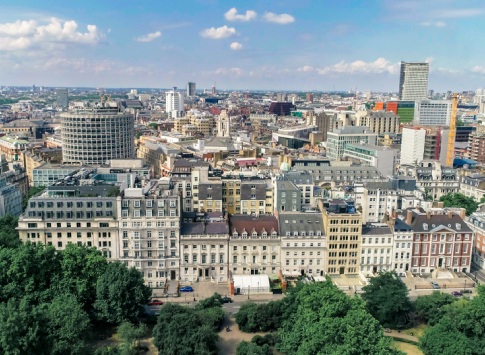
Living in Covent Garden: Is London's Most Visited District Actually a Great Place to Live? Forty-four thousand people pass through Coven...
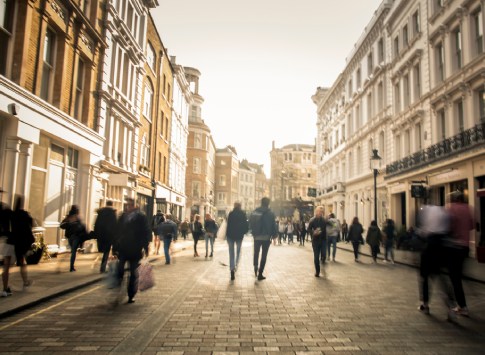
Two streets thirty seconds apart on foot. A £500,000 difference on a comparable flat. That's the reality of buying in Covent Garden, wher...
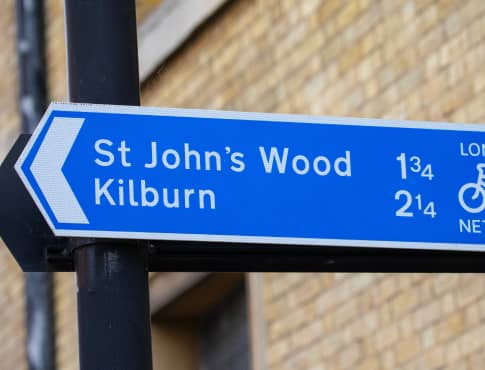
Few London neighbourhoods manage to feel genuinely spacious whilst sitting minutes from the West End, but St John's Wood pulls it off. ...


