St John’s Wood: The Complete Area Guide
Few London neighbourhoods manage to feel genuinely spacious whilst sitting minutes from the West End, but St John's Wood pulls it off. ...


While Baker Street is a single street, the property market around it is shaped by a network of adjoining roads, each with its own character, architecture, and price dynamics.
As Marylebone estate agents based in the heart of the district, Kubie Gold has monitored the Baker Street market for 25 years, and for buyers and investors, understanding the details of the local property market is essential to finding the right property at the right price.

This guide breaks down the key streets and pockets of property around Baker Street, covering what makes each small area distinctive, how prices vary, and where some of the best opportunities lie.
In a concentrated prime London market like Marylebone, property values can shift significantly within the space of a few hundred metres. Factors that drive these differences include proximity to Baker Street and Marylebone stations, whether a street falls within a conservation area, the quality and period of the housing stock, access to Regent’s Park, and the presence (or absence) of through-traffic.
For example, the Baker Street Two-Way project, completed in February 2019, converted Baker Street and Gloucester Place from a one-way gyratory to two-way traffic. According to the Portman Estate’s post-implementation monitoring report, this led to vehicle speed reductions of 25–30%, and pedestrian activity increased by up to 84% in areas with improved crossings. These improvements have enhanced the appeal – and in some cases the value – of properties on Baker Street itself and on the side streets between Baker Street and Gloucester Place.
Running south-east from Baker Street towards Marylebone station, Chiltern Street has transformed over the past decade into one of Marylebone’s most fashionable addresses. The street combines Edwardian red-brick mansion blocks with boutique retail, independent restaurants, and the Chiltern Firehouse hotel.
Property is predominantly flats within mansion blocks and The Chilterns, a modern luxury development. One- and two-bedroom flats on Chiltern Street can sell for £1–£2.5 million according to recent listings, reflecting the street’s strong lifestyle appeal and proximity to both Baker Street and Marylebone stations.
A quieter, predominantly residential street running south from Blandford Street towards Manchester Square (home to the Wallace Collection), Manchester Street features a mix of Georgian terraced houses and mansion block flats. The Georgian townhouses here are particularly sought after, with four- and five-storey houses which may sell for £3–£5 million or more. The street benefits from a peaceful setting while remaining a short walk from Baker Street station.
Running parallel to Baker Street on its western side, Gloucester Place is a wide, tree-lined street with substantial period buildings – primarily Georgian and Victorian terraced houses, many converted into flats.
Since the two-way traffic conversion, the street has become quieter and more pedestrian-friendly. Gloucester Place offers slightly more affordable entry points than Baker Street itself, with one-bedroom conversion flats available from around £700,000. Larger properties and unconverted houses may reach as high as £5 million, or more.
Located south-east of Baker Street, Devonshire Place is one of Marylebone’s most elegant residential streets, characterised by late-Georgian terraced houses of considerable scale and architectural distinction.
Properties here are among the most expensive in the Baker Street area, with complete houses rarely coming to market, and commanding prices of £5 million upwards. The street also benefits from proximity to Harley Street and Regent’s Park.
Not every desirable street near Baker Street carries a headline price tag. Several less prominent roads offer genuine character and, in some cases, better value per square foot:
The table below provides indicative sale price ranges and typical monthly rents by street, based on recent Rightmove and Zoopla listings and HM Land Registry transaction data. Be mindful that all figures are approximate, and will vary by property condition, floor space, and other specifications when considering a particular home.
| Street | 1-bed flat (sale) | 2-bed flat (sale) | 2-bed flat (rent pcm) |
| Baker Street | £700k–£1.1m | £1.2m–£2.5m | £3,500–£5,500 |
| Chiltern Street | £850k–£1.3m | £1.5m–£2.5m | £3,800–£5,500 |
| Gloucester Place | £700k–£1m | £1m–£2m | £3,000–£4,500 |
| Manchester Street | £800k–£1.2m | £1.3m–£2.2m | £3,500–£5,000 |
| York Street / Melcombe St | £600k–£900k | £1m–£1.8m | £2,600–£4,000 |
| Bentinck Street | £700k–£1m | £1.1m–£1.8m | £3,000–£4,200 |
| Paddington Street | £650k–£950k | £1m–£1.7m | £2,800–£4,000 |
Sources: Rightmove; Zoopla; HM Land Registry data (to December 2025). Rents based on current portal listings at time of writing (March 2026).
The Baker Street area can be understood through three overlapping lenses that affect property demand and value:
The Portman Estate Conservation Area covers much of the area west and south of Baker Street, including Gloucester Place, Manchester Street, and Portman Square.
The Dorset Square Conservation Area covers the streets around Dorset Square and Melcombe Street. Properties within these zones are protected from unsympathetic development, which preserves the streetscape and tends to support long-term values – but imposes planning constraints on external alterations.
Streets within the catchment area of St Marylebone CE School (the highly regarded Ofsted ‘Outstanding’ girls’ secondary school on Marylebone High Street) see particularly strong demand from families. Properties on York Street, Paddington Street, and the streets east of Baker Street tend to fall within or close to this catchment. Francis Holland School (independent, girls, on Ivor Place) also draws family buyers to the immediate Baker Street area.
Properties closest to Baker Street station (five Underground lines) and Marylebone station (Chiltern Railways) attract strong demand from professionals. Streets such as Melcombe Street, York Street, and Chiltern Street offer particularly quick access to both stations and tend to have higher rental yields as a result. The Elizabeth Line at nearby Paddington has further enhanced east–west connectivity, benefiting streets on the western side of the Baker Street area.
Want to find out more? Read about living in Baker Street and browse the variety of property types in Baker Street to find your ideal home.
The Baker Street area shows a clear pattern in tenure mix. Streets closest to the stations – Melcombe Street, York Street, and parts of Baker Street itself – tend to have a higher proportion of rental properties, particularly smaller flats occupied by young professionals and corporate tenants.
By contrast, the larger Georgian and Edwardian properties on Manchester Street, Devonshire Place, Chiltern Street, and Dorset Square attract a higher proportion of owner-occupiers – often families or long-term residents who value the stability and character of these streets. Investors seeking rental yield may find better returns on smaller flats near the stations, while those prioritising capital growth and long-term hold may prefer the premium streets with higher owner-occupation rates.
Several developments and infrastructure changes have shaped the Baker Street property market in recent years:
These improvements have reinforced Marylebone’s position as one of London’s strongest prime residential markets.
Streets close to Regent’s Park and within the catchment of top-rated schools are most popular with families. York Street, Paddington Street, and the streets east of Baker Street (towards Marylebone High Street) offer a good combination of green space access, school proximity, and a quieter residential feel. Park Road, running along the western edge of Regent’s Park, is another strong family option.
Service charges in Baker Street mansion blocks typically range from £3,000 to £8,000 per year, covering porterage, lift maintenance, communal garden upkeep, and building insurance – but this certainly varies. Blocks with 24-hour porterage services (such as Chiltern Court) tend to be at the higher end. Premium new-build developments with concierge, gym, and other amenities may charge substantially more.
Smaller flats on less prominent streets – such as Bentinck Street, Paddington Street, or the Gloucester Place side roads – may offer better gross rental yields than prime mansion block flats on Baker Street or Chiltern Street, where yields tend to be lower due to higher capital values.
The Baker Street Two-Way project (completed 2019) has broadly supported property values by improving the pedestrian environment, reducing traffic speeds and noise, and making the street more attractive for residents and visitors.
The streets around Baker Street offer a diverse range of property options – from the Georgian elegance of Manchester Street and Devonshire Place to the village-like charm of Paddington Street and the modern luxury of Chiltern Street.
As independent estate agents with deep roots in Marylebone, Kubie Gold offers the localised expertise that makes the difference in a market where street-level knowledge matters. Contact us today with your property enquiries.

Few London neighbourhoods manage to feel genuinely spacious whilst sitting minutes from the West End, but St John's Wood pulls it off. ...
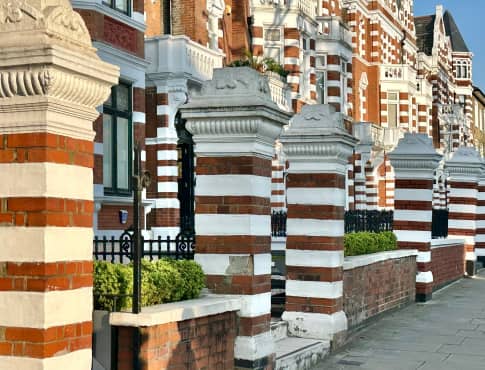
Streets in St John's Wood aren't identical, and the gap between them can run lead to large differences in property prices. A grand villa ...
Detached Victorian villas, garden-lined avenues, and a streetscape that feels more like a prosperous country town than inner London, St J...


